
The Zhou court
In the ritual code Rites of Zhou, a sauce made of ant eggs, 蚳醢, is placed in ritual vessels for offerings. The book is more than two thousand years old.
An ant whose neck withstands five thousand times its own weight, a sauce for the Zhou court and the three treasures of the Taoists — the story of one vial in figures, documents and legends
In brief
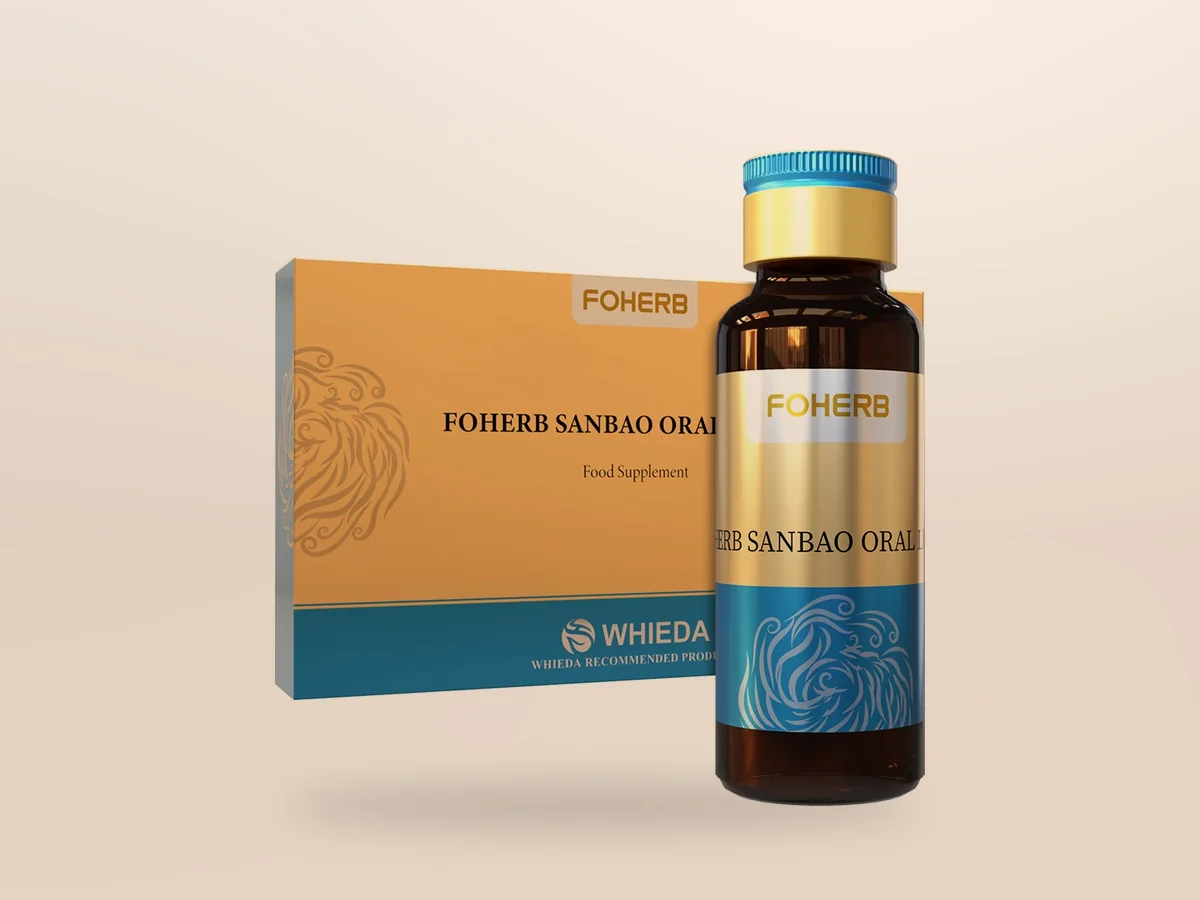
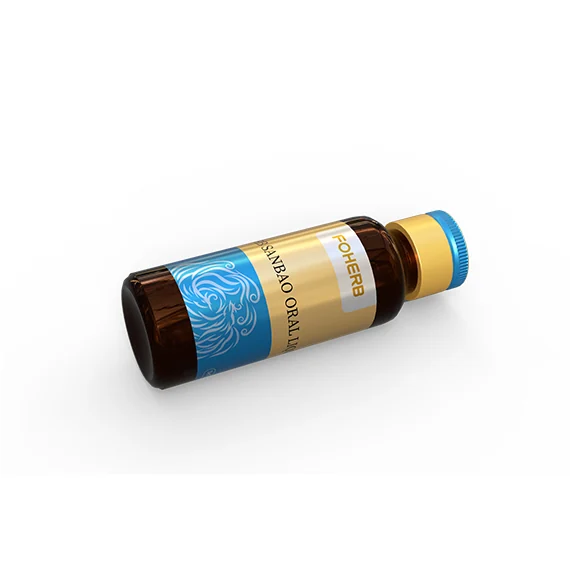
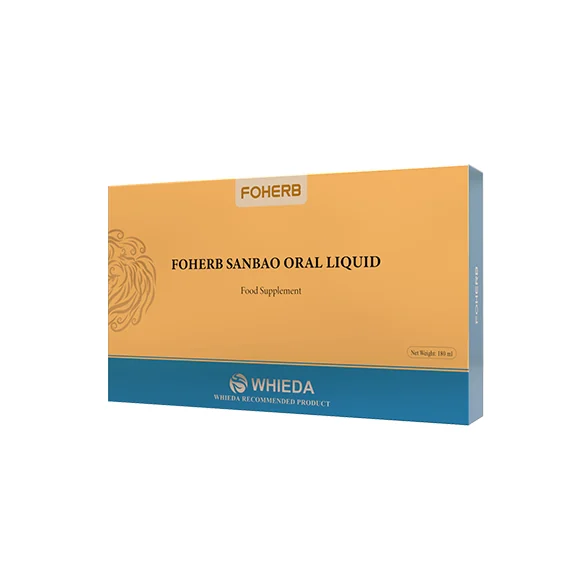
Fohow Elixir 3 Treasures is made at the Fohow pharmaceutical plant in Tianjin and sold in Russia by WHIEDA. Inside is the same base as the Phoenix Elixir, plus black spiny ant extract. The ant is tiny, but its safety margin is worthy of an engineer. In 2014 American scientists tested an ant’s neck to breaking point, and it held up to five thousand times the body weight. The experiment used a different, forest species. Ours lives in China, where ants have been invited to the table for more than two thousand years. Half a vial at breakfast — and your energy lasts until evening: for work, for home and for yourself.
Ohio State University engineers took the ant apart like a mechanism they wanted to copy. The insects were put to sleep with cold, glued face-down into a special centrifuge and spun up to hundreds of revolutions per second. The neck is the only joint through which the entire load from the jaws passes to the six legs. That is what they tested to breaking point (J Biomech, 2014). The safety margin surprised the authors themselves: beforehand they had bet on about a thousand times the body weight (Ohio State University). Now they are thinking about how to give robots joints like these.
There are almost 20 quadrillion such strongmen on Earth. Biologists at the University of Hong Kong arrived at that figure in 2022 by pooling 489 studies from every continent. Together, ants weigh more than all the planet’s wild birds and mammals combined — roughly a fifth of the weight of humanity (PNAS, 2022).
At this load the neck only begins to stretch.
At this load it breaks. The experiment used the American forest ant Formica exsectoides.
That’s how many ants there are for every person: 20 quadrillion for 8.2 billion people.
Look at the character for “ant”: 蟻. On the left is the sign for “insect,” on the right 義 — “duty, righteousness.” The explanation was left by Li Shizhen in 1578, in his great herbal, the Bencao Gangmu. Ants, he writes, have the duty of ruler and subject — hence the character. They live by rank, march in formation and sense rain in advance (text of the herbal).
That same entry in the herbal holds the whole history of the ant in China. It has been both a delicacy for the nobility and a guardian of gardens.
The Zhou court
In the ritual code Rites of Zhou, a sauce made of ant eggs, 蚳醢, is placed in ritual vessels for offerings. The book is more than two thousand years old.
304 AD
The botanist Ji Han records that in the south ants are sold together with their nests, on twigs, as if in little bags of fine cotton wool. Without them, pests would devour the mandarins. It is the world’s first known description of insects being hired to guard an orchard (Wikipedia). That was a different species at work, the weaver ant.
9th–10th centuries
The book Lingbiao Luyi tells of the chieftains of the south. They gather ant eggs, wash them and make a sauce. It tastes like meat, and only the nobility could get it.
1578
Li Shizhen finds the same orchard custom almost 1,300 years later. Ants in canvas sacks are sold to mandarin growers.
Today
The black spiny ant is the only ant species recognised in China as both food and medicinal raw material (Food Research International, 2025).
How did an ant end up in a vial next to mushrooms? Through a recipe the plant already had. “3 Treasures” is the younger sister of the Phoenix Elixir. They share a base: a culture of Tibetan cordyceps, lingzhi and shiitake on honey. We told the story of this cordyceps, which in 2012 cost twice as much as gold, in our article about the Phoenix Elixir. Here, the ant was added to it.
Ingredients according to the official catalogue — five components in water: cordyceps, shiitake and black spiny ant as extracts, lingzhi spores and honey (elixir product card).
BaseCordyceps culture, lingzhi, shiitake, honey
Ant—
Chinese name凤凰口服液, the fenghuang bird
Marker in the certificateAdenosine
Box6 vials of 30 ml
BaseThe same concentrate, with lingzhi as spores
AntBlack spiny ant extract
Chinese name三宝口服液, “three treasures”
Marker in the certificateThe same adenosine: the certificate lists the elixir as a source of polysaccharides containing adenosine
BoxThe same 6 vials of 30 ml
Scientists call it Polyrhachis dives; in Chinese it is 拟黑多刺蚁. It really is spiny: worker ants have spines on their backs. It lives from southern China and Japan to Australia and builds its nests right in the trees, stitching leaves together with the silk of its larvae. In Okinawa it is known for its strong and painful bite (Wikipedia). In China the main harvesting regions are Guizhou, Yunnan and Guangxi.
Animals value it too. The black spiny ant is the main prey of the Chinese pangolin, a scaly anteater on the brink of extinction. Zoologists from Guangzhou analysed the composition of a whole nest so that captive pangolins could be fed as they are in the wild (Zoo Biology, 2022).
The protein content of the ant, according to Chinese research centres cited in WHIEDA’s official catalogue. Plus 19 amino acids, including essential ones, 14 trace elements and B vitamins (B1, B2, B12), as well as A, C, D and E.
Of the 14 trace elements, there is most of this one: 120–198 mg per kilogram of dried ant (review in China Pharmacy, 2020).
Valuable raw material deserves checking. In 2025 Chinese pharmacists found seven marker peptides that distinguish genuine black spiny ant from other species (Food Research International, 2025).
In Chinese the elixir is called 三宝口服液 — “Three Treasures oral liquid.” The vial says so in Latin letters: SANBAO. In Chinese medicine, a person’s three treasures are jing, qi and shen: essence, vital force and spirit. The Taoist “Jade Emperor’s Heart Seal Sutra,” written more than seven hundred years ago, opens with the line 上藥三品,神與氣精: “The supreme medicine is of three kinds — spirit, qi and essence.” A little further on it says: never fading, never ageing, ever green like pine and cypress (sutra text).
The Fohow plant builds its philosophy on these three. The manufacturer’s website says: 人之三宝精气神 — “a person’s three treasures are essence, qi and spirit.” Food nourishes essence, movement nourishes qi, and a calm mind nourishes spirit (foherb.cn). The word 三宝 has other lives too. For Lao Tzu it means compassion, moderation and not rushing ahead of everyone; in Buddhism it is the Buddha, the Dharma and the Sangha.
The great book of Chinese medicine, the Huangdi Neijing, counts a woman’s life in seven-year cycles. At seven, a girl’s kidney qi grows strong. At fourteen, her periods begin. At twenty-eight, the body is in full bloom. At forty-two, the sixth seven, the face loses its freshness and the first grey hairs appear. At forty-nine, tiangui — the “heavenly water” of female strength — runs dry. For men the count goes in eight-year cycles (Neijing text).
If you are forty-five, you are right between the sixth and seventh sevens. And in the same chapter the book leaves room for hope. The Yellow Emperor asks why some people keep their strength even in later years. The physician Qi Bo answers: their qi flows freely through the channels, and their kidney qi is abundant.
In this picture, the kidneys are a storehouse. They receive the essence of all the organs and keep it, says the Neijing. This is jing, the first of the three treasures. Parents give it at birth, and the whole of life spends it: worries, illnesses, overload. It is replenished with food and practices (Wikipedia). Chinese reference books say of the ant exactly that: 补肾, “nourishes the kidneys” (review in China Pharmacy). In folk tradition it is a remedy for elders: it is said to lengthen one’s years and add qi, and to give men strength. Ant extract is usually taken mixed with wine (Wikipedia).
The ant is also studied in laboratories in Tianjin, the very city where the Fohow plant stands.
A study of the ingredient, not the finished product. Biologists at Nankai University prepared a water-alcohol extract of black spiny ant and counted 60 active components in it. Among the main ones are salicylic and gallic acids. In vitro, the extract showed strong antioxidant activity, meaning it neutralised free radicals (Frontiers in Nutrition, 2022).
The elixir is made for grown-up life, with work, home and all your loved ones at once:
Just over forty
Work, parents, children — and it all rests on you. According to the Neijing, this is just when the body moves into a new season, and you want to protect its root.
Recovery
The illness is behind you, but your strength is coming back more slowly than you’d like.
The dark season
October and November: dark by five, mornings that begin in darkness, everyone at home sneezing in turn.
A gift for him
For your father or husband. In China the ant has long been kept for men’s strength, and a vial is easy to take along.
One minute at breakfast — and that’s it. No brewing, no measuring spoons, no counting drops. The regimen follows the state registration certificate:
Give it a shake
Shake the vial each time before taking.
Half with a meal
15 ml once a day, in the morning or at lunch.
The rest — for tomorrow
An opened vial keeps in the fridge for up to two days.
12 days
That’s how long a box of six 30 ml vials lasts.
Individual intolerance to the ingredients, as well as pregnancy and breastfeeding. The certificate recommends consulting a doctor before use. The regimen is designed for adults. Contains mushrooms, honey and insect protein.
RU.77.99.11.003.R.001594.05.21State registration certificate
EAEU certificate dated 14 May 2021. A dietary supplement, a source of polysaccharides with adenosine. Issued on the basis of an expert review by Rospotrebnadzor’s Federal Centre for Hygiene and Epidemiology; valid indefinitely. Open PDF ↗
LPP-92Certificate of free sale
Issued by the State Food and Veterinary Service of Lithuania on 2 June 2025, valid until 2 June 2027. The Service confirms that FOHERB SANBAO ORAL LIQUID, six 30 ml glass vials, is legally sold in Lithuania and the European Union. It is imported by the Vilnius company UAB Kordicepsas. Certificate scan ↗
HACCP · since 2012The plant’s safety system
The Fohow plant in Baodi district has operated under the HACCP food safety system since 24 October 2012. The current certificate is valid until 4 June 2027. Plant certificate ↗
CN104068379BPatent for the base formula
Three mushrooms and honey — the same document as for Phoenix. Granted in 2016 and in force. Open patent ↗
WEF · 2023“Innovation” award
The World Economic Forum presented the FOHERB group, which includes the plant, with the New Champions Awards 2023 for innovation. WEF page ↗
Three names on one box: the Fohow plant in Tianjin makes the elixir, FOHERB is its group and brand, and WHIEDA sells the elixir in Russia and the CIS.
How is “3 Treasures” different from the Phoenix Elixir?
The base is the same; the difference is the ant and the name. The regimen in the certificate is the same too: half a vial a day. If you want the base without the ant, choose Phoenix. Phoenix product card →
How many vials do you need for a month?
At half a vial a day — 15 vials for 30 days. That’s two and a half boxes.
How long does an unopened box keep?
Shelf life is 24 months. Keep the box somewhere dry, out of direct sunlight, no warmer than +25 °C and out of children’s reach.
Why does the vial say SANBAO?
It’s the elixir’s Chinese name, 三宝, “three treasures.” It is sold under that name in Hong Kong too: in the store on the fohow.com domain, the box carries the Russian product name “Elixir 3 Treasures.” store page ↗
A culture of Tibetan cordyceps, lingzhi and shiitake on honey — and the little strongman from the ritual table.
Six vials in a box cost 3,300 ₽. One vial comes to about 550 ₽, and a day at half a vial to about 275 ₽. Availability and ordering are on the product card.